

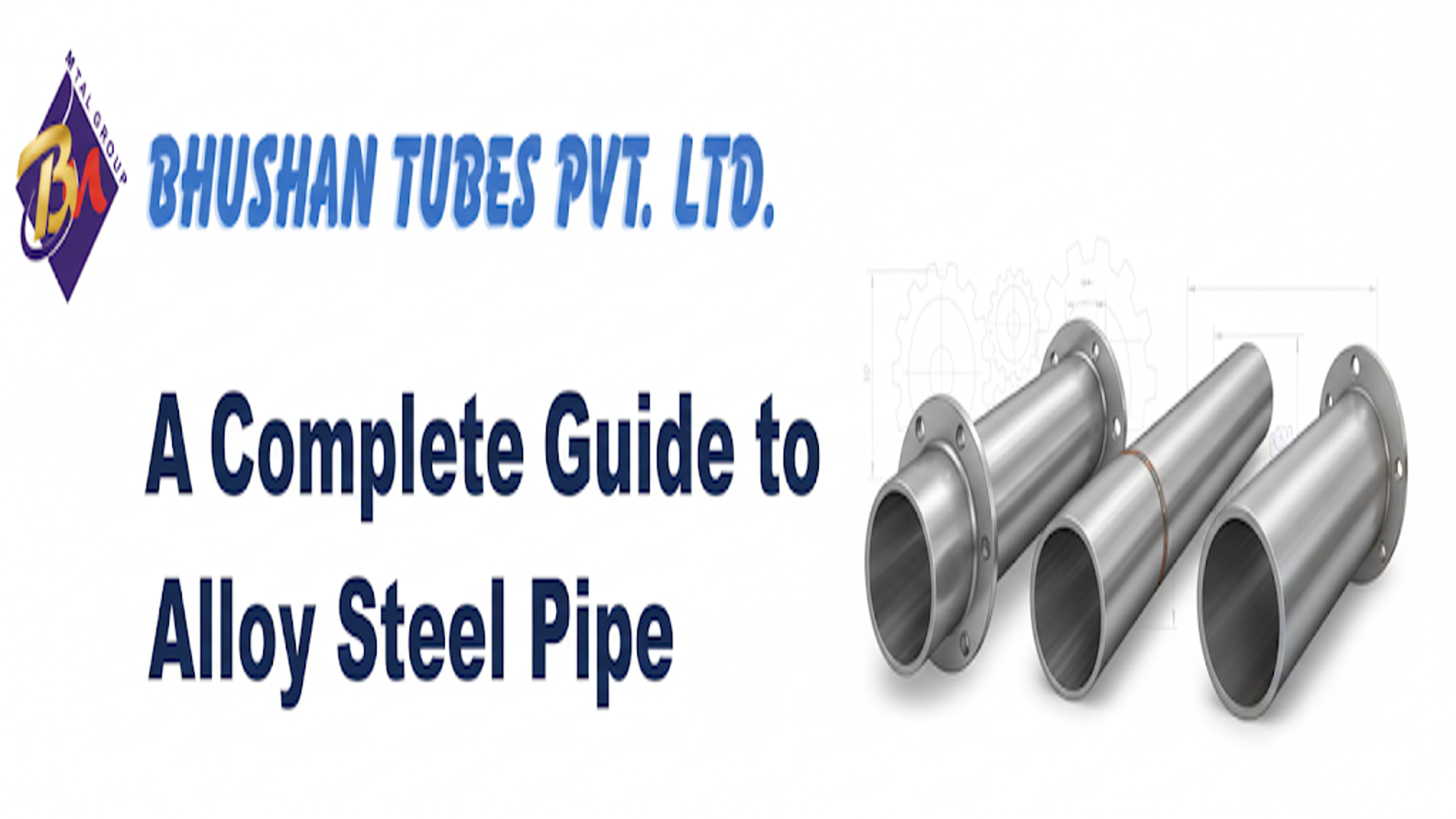
Alloy steel pipes plays a crucial role in today’s industries as they need a high strength, durability and ability to handle tough conditions. Whether they are found in power plants, refineries, boilers or petrochemical plant, these pipes that can offer performance advantage that standard carbon steel cannot match. In this guide we will explore steel pipes by Bhushan Tubes as their main properties, common grades, uses and why they are perfect for high pressure and high temperature situation.
What Are Alloy Steel Pipe?
Alloy steel pipes is created by mixing carbon steel with different elements like chromium, molybdenum, nickel, vanadium and manganese. These added elements boosts the mechanical and chemical characteristics of the steel which results in greater strength and better resistance to damage, heat and wear. The higher the alloy content the more improved pipe performance.
Types of Alloy Steel Pipe
- Seamless Alloy Pipe: These pipes are designed without any welded joints which makes them perfect for high pressure and temperature applications like boilers, heat exchangers and refinery operations.
- Welded Steel Pipe: It manufactured by welding of steel plates and strips, these pipes are more cost effective option and are great for medium pressure application, structural purpose and general engineering task.
- Heat Treated Alloy Pipes: To increase their strength and durability, these pipes undergo the heat treatment which include normalizing, annealing or quenching.
Chemical Composition of Alloy Pipe
The chemical composition of Alloy steel pipes helps in influencing the effectiveness of the material. So the common alloying elements are:
- Chromium: It enhances the resistance to damage and oxidation.
- Molybdenum: It supports to boost the strength and improves performance at high temperature.
- Nickel: It increases toughness and enhances resistance to low temperature.
- Manganese: It helps in improving hardenability and wear resistance.
- Vanadium: It helps in strengthen and increases shock resistance.
Manufacturing Process of Alloy Pipe
The manufacturing of Alloy Steel Pipes by Bhushan Tubes typically involves:
- Selection of raw material according to the needed grade.
- Melting and refining the alloy which blends in an electric arc or induction furnace.
- Shaping the steel pipes smoothly by extrusion or welding.
- Applying the heat treatment to reach the required strength and mechanical properties.
- Conducting test and inspection like ultrasonic testing, hydrostatic testing and dimensional checks.
This process ensures that the pipes meet the international standards and provide reliable performance.
Application of Alloy steel Pipe
Alloy Steel Pipes nowadays are used in various sectors:
- Power plants
- Oil & gas pipelines
- Petrochemical & Fertilizer Plant
- Chemical Processing Unit
- Refineries and thermal plant
- Heat Exchangers and pressure vessels
Their ability to handle the harsh working condition makes them more reliable in these industries to serve a long lasting performance.
Why To Choose the Right Alloy Steel Pipe?
Choosing the right quality and type of Alloy Steel Pipe is the key for safety, efficiency and long lasting durability. The right pipes will help in reducing the maintenance cost, avoids the system failure and provide long lasting performance even under high pressure and temperature change.
Conclusion
Alloy steel pipes are ideal and necessary for industrial use because of their extraordinary strength, resilience, and durability. You can choose the perfect steel pipes for your projects by keeping their information of the type, composition, manufacturing process and application. We at Bhushan Tubes provide premium steels that can satisfy global standards and assures reliable performance for various uses.